
Art Therapy Activity for Anger
Art Therapy Activity for Anger
Hello friends, today, I'll show you how to make art when you feel angry or mad.
This exercise will help you feel more grounded and calm by releasing the tension, processing the source of anger, and getting in touch with your body.
I make art for myself and have been helping people through art therapy for years. As a way to keep up with my own self therapeutic art practice, I am sharing this with you and invite you on this creative journey.
Make yourself comfortable and cozy by setting up the space and atmosphere. You can burn some candles and brew some tea.
If want to watch the step by step video where I share the exercise you can see it here:

Art Materials You Need
The materials you need are:
clay modeling tools (optional)
Mindfulness and Intention
Before the art, let's invite mindfulness and become aware of our physical body/self. Gently place your attention on your breathing, in and out.
Put your left hand on your heart, right hand on your belly.
When you feel angry, what sensations do you have in your body and where do you feel this?
Let's also invite some intention. When we do this self art therapy exercise, we want to practice non-judgment and acceptance. There is no right or wrong way to make art. Simply focus on expressing yourself honestly.
The therapeutic Art Prompt
Now that you are ready, here are the steps:
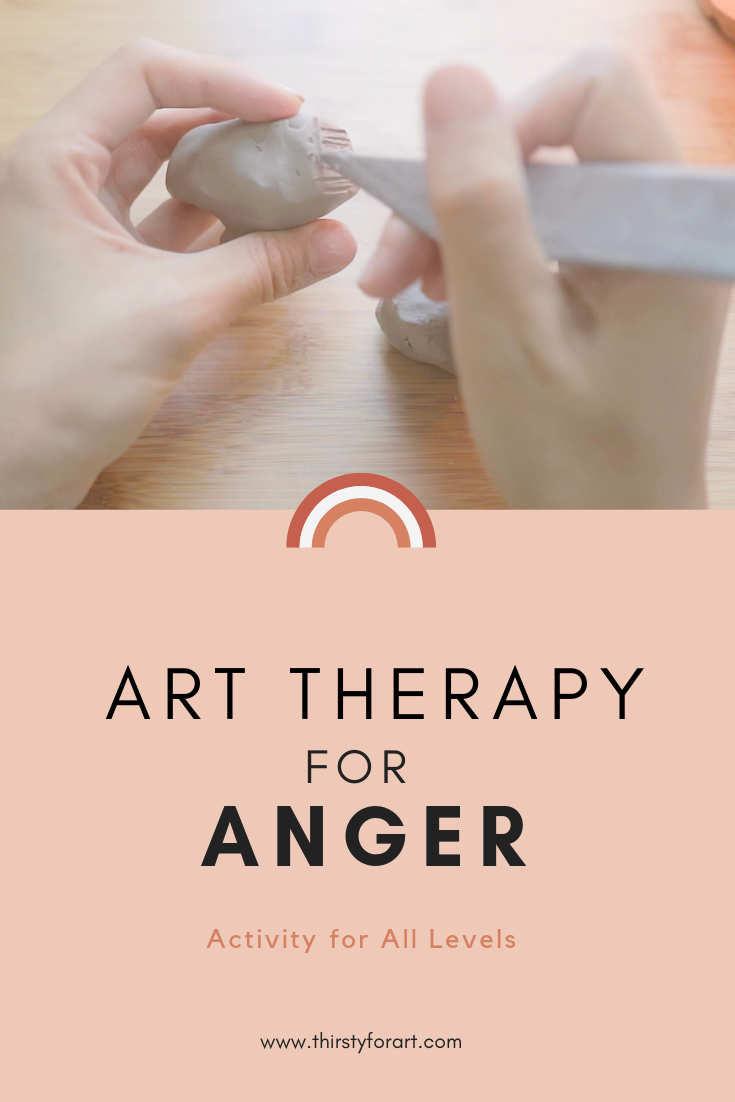
Use clay to make an “angry” object or animal
Express what this angry object or animal is trying to protect (or what it is afraid of - guess if you have to)
Clay work is a kinesthetic experience that releases tension, stimulates energy and helps discharge it through movement.
Since the material is resistive it takes our energy, and we become more invested in it.
Reflective Writing
After you are finished with the work, let's do some reflective exercise to go deeper into our therapeutic artwork.
Bring a journal and a pen. Write down the answers to these questions:
What is it like to work with clay? What did you like or not like about it?
What comes to mind when you look at the two pieces? Similarities and differences?
This exercise works best when it’s repeated and supported. If you want a gentle structure to keep going, I created a vault of 300+ therapeutic art prompts/exercises you can return to anytime. Tap the button below ↓♥︎
One exercise can help — but consistency is what changes your relationship with emotions.

--
* This post may contain affiliate links. If you buy something through one of those links, you won’t pay anything more, but I’ll receive a small commission, which helps me keep making videos & writing blogs for free. Thank you!